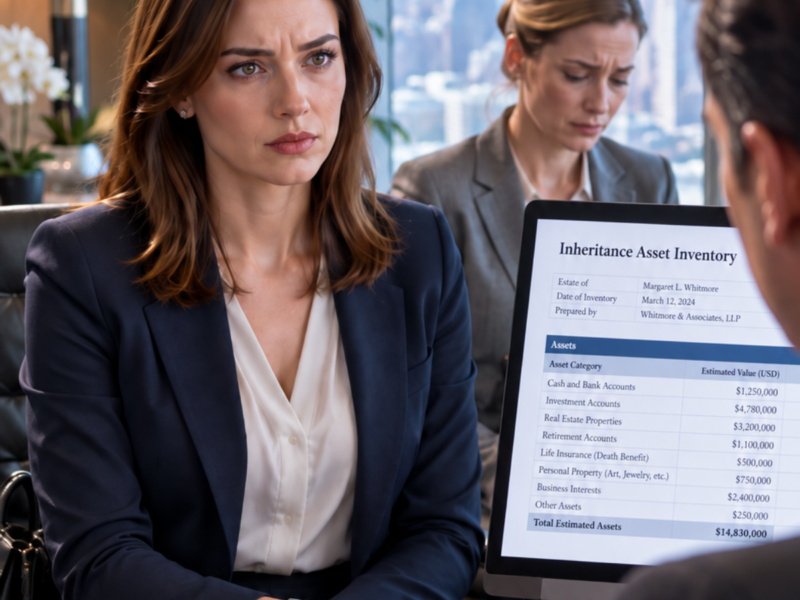
A week after my husband’s funeral, I went to the bank and the trust fund to inquire about his assets, only to discover that the bulk of his money and property had been transferred out three days before he died. The further I investigated, the more I uncovered a truly sickening betrayal.
A week after my husband’s funeral, I went to the bank and the trust fund to inquire about his assets, only to discover that the bulk of his money and property had been transferred out three days before he died. The further I investigated, the more I uncovered a truly sickening betrayal.
Seven days after we buried my husband, I learned that the dead could still steal from you.
Not in the poetic sense. Not in the way grief steals your appetite, your sleep, or your ability to walk into a room without expecting to see the person you loved sitting in his usual chair.
I mean literally.
At 10:17 on a gray Monday morning, a private banker named Martin Kessler turned his computer monitor slightly away from me, removed his glasses, and said, “Mrs. Whitmore, I think we should stop for a moment.”
I had been sitting in the same leather chair for nearly half an hour, clutching a folder containing Andrew’s death certificate, our marriage certificate, a copy of his will, and the little card the funeral home had given me explaining how many certified death certificates widows usually needed.
Twelve, apparently.
No one told you that mourning came with paperwork.
“What do you mean, stop?” I asked.
Martin looked toward the glass wall of the conference room, as if expecting someone to rescue him.
Outside, people moved silently through the private banking floor carrying laptops and coffee cups. Beyond them, forty stories below, Manhattan looked washed clean by rain.
“I need to make sure I’m understanding the account history correctly.”
“You’ve been looking at it for twenty minutes.”
“Yes.”
“And?”
He pressed his lips together.
Andrew had known Martin for almost fifteen years. He had attended our Christmas parties. He had sent flowers when Andrew entered the hospital. At the funeral, he had stood in the second row beside two of Andrew’s business partners and cried during the eulogy.
Now he looked frightened.
That frightened me more than anything.
“Martin,” I said, “what happened?”
He turned the monitor toward me.
Numbers filled the screen.
I understood enough about our finances to recognize the accounts. Andrew had insisted on that. He had never been one of those husbands who told his wife not to worry her pretty little head about money. I knew where the retirement accounts were. I knew which investment funds we owned. I knew the apartment on Park Avenue was held through a family trust. I knew about the house in Connecticut, the commercial properties in Brooklyn and New Jersey, the life insurance policies, and his ownership stake in Whitmore Development Group.
I also knew roughly what the estate should have been worth.
Somewhere between seventeen and twenty million dollars, depending on market valuations and how the company was assessed.
The balance displayed in front of me was $642,118.33.
For several seconds, I simply stared at it.
“There’s something missing,” I said.
Martin did not answer.
“Where are the investment accounts?”
“They were liquidated.”
“When?”
He moved the cursor.
A date appeared.
March 9.
Andrew had died on March 12.
I read the date twice.
Then a third time.
“That can’t be right.”
“The transactions settled on the ninth.”
“He was in the hospital.”
Martin nodded.
“He could barely speak.”
“I understand.”
“No, I don’t think you do.” My voice sharpened. “Three days before my husband died, he was receiving intravenous morphine. His kidneys were failing. He didn’t know what day it was.”
Martin leaned back.
“There were authorization documents.”
“What authorization documents?”
“A revised durable financial power of attorney and several transfer instructions.”
My heart began pounding so loudly I could hear it in my ears.
“Who had power of attorney?”
Martin hesitated.
“Martin.”
“Owen Kerr.”
For a moment, the name meant nothing.
Then it meant everything.
Owen had been Andrew’s chief financial officer for eighteen years.
He had stood beside me at the cemetery.
He had put one hand on my shoulder while the coffin was lowered.
He had whispered, “Anything you need, Eleanor. Anything.”
I felt cold spread through my chest.
“How much?”
Martin’s eyes lowered.
“Approximately eleven point eight million dollars in liquid assets.”
My throat tightened.
“Transferred where?”
“To a trust account.”
“What trust account?”
He turned the monitor away again.
“I can’t disclose beneficiary information until our legal department determines your rights under the documentation.”
“My rights?”
“I’m sorry.”
“I am Andrew Whitmore’s wife.”
“I understand.”
“I am trustee of the family trust.”
“According to the records we received, you ceased being trustee on March ninth.”
I stared at him.
“What did you just say?”
“The Whitmore Family Trust was amended.”
“That is impossible.”
“The amendment removed you as successor trustee.”
My hands began to shake.
“Who replaced me?”
Martin did not answer immediately.
Then he said, “Owen Kerr.”
I laughed.
It was not because anything was funny.
It was the strange, empty laugh your body produces when reality becomes so absurd that your mind rejects it.
“Owen?”
“Yes.”
“Andrew removed his wife of twenty six years and appointed his CFO while he was dying?”
“That is what the documents indicate.”
“What about the properties?”
Martin’s expression changed.
That was when I knew there was more.
“What about them?”
“The Park Avenue apartment was transferred into another trust.”
My stomach dropped.
“The Connecticut house?”
“The same.”
“The Brooklyn properties?”
“Transferred.”
“My husband’s company shares?”
“I don’t handle the corporate records.”
“But you know.”
He looked at me for a long moment.
“I believe there was a transfer.”
I sat very still.
A week earlier, I had stood in St. Matthew’s Church surrounded by two hundred people while a string quartet played the hymn Andrew loved.
I had accepted condolences from employees, investors, neighbors, cousins I had not seen in twenty years, and people who claimed Andrew had changed their lives.
I had slept wearing one of his old shirts because it still smelled faintly of cedar and the shaving cream he had used every morning.
I had apologized to him in the dark because, during the final week of his illness, I had once wished for his suffering to end.
And now I was sitting in a bank being told that three days before he died, nearly everything we owned had disappeared.
“Where did it go?” I asked.
Martin said nothing.
I leaned toward him.
“Where did my husband send our money?”
He looked me directly in the eyes.
“I think you need an attorney.”
My lawyer, Lila Chen, listened without interrupting.
I called her from the back seat of a taxi after leaving the bank. By the time I reached her office on Madison Avenue, she had already contacted the trust company and requested an emergency preservation of records.
Lila had been Andrew’s estate attorney for nearly nine years.
She was forty six, precise, rarely emotional, and possessed a talent for making people uncomfortable simply by remaining silent longer than they could.
When I finished explaining what Martin had shown me, she folded her hands on her desk.
“I didn’t draft those documents.”
“I know.”
“And Andrew didn’t ask me to amend the trust.”
“I know.”
“When was the last time you saw him sign anything?”
I tried to remember.
“The week before he went into the hospital.”
“What was it?”
“Insurance paperwork.”
“Was Owen there?”
“No.”
“Who was?”
“Rebecca.”
Lila’s expression barely changed.
But I noticed.
“What?”
“Nothing yet.”
“Lila.”
She looked at me.
“Tell me about Rebecca.”
I almost laughed again.
“Rebecca is my best friend.”
“How long have you known her?”
“Since college.”
Thirty two years.
Rebecca Sloan had been standing beside me for nearly every important moment of my adult life.
She had helped me choose my wedding dress.
She had held my daughter, Ava, ten minutes after she was born.
When Rebecca’s marriage collapsed, she spent three months sleeping in our guest room.
When her son Lucas was little, he called me Aunt Ellie.
When Andrew became sick, Rebecca cooked for me, drove me to the hospital, organized medication schedules, and sat beside me during the long nights when the doctors used phrases like disease progression and limited options.
At Andrew’s funeral, she had delivered one of the readings.
“She was helping me,” I said.
“With what?”
“Everything.”
“Did she have access to Andrew’s documents?”
“She had access to the house.”
“Passwords?”
“I don’t know.”
“His phone?”
“Sometimes. He would ask her to answer messages if I was speaking to a doctor.”
Lila leaned back.
“Did Andrew have a personal relationship with Rebecca outside your friendship?”
“They were friends.”
“That isn’t what I asked.”
I stared at her.
A tiny pressure began forming behind my ribs.
“No.”
“Are you certain?”
“Yes.”
The answer came too quickly.
Lila heard it.
So did I.
She turned toward her computer.
“I’m going to petition for an emergency injunction preventing further transfers. We’ll also demand copies of the amended trust, power of attorney, signature records, IP logs, and notarial certificates.”
“You think they’re forged?”
“I think an eighteen million dollar estate does not normally reorganize itself seventy two hours before the settlor dies without the estate attorney hearing about it.”
“Can we get the money back?”
“If there was fraud, coercion, incapacity, or breach of fiduciary duty, possibly.”
Possibly.
I hated the word immediately.
“What do you need from me?”
“Everything Andrew touched financially in the final six months. Computers, phones, handwritten notes, medical records, correspondence.”
“I can do that.”
“And Eleanor?”
“Yes?”
“Do not confront Owen.”
I nodded.
“And don’t confront Rebecca.”
My eyes snapped toward her.
“You keep saying her name.”
“I’m telling you not to confront anyone who had access to your husband during his final illness.”
“She would never do something like this.”
Lila’s face softened slightly.
“I hope you’re right.”
That afternoon I drove to Connecticut.
Andrew and I had bought the house in Westport eighteen years earlier when Ava was eight. It had white clapboard siding, blue shutters, and an enormous maple tree that turned almost violently red every October.
It was where Andrew taught Ava to ride a bicycle.
Where Rebecca and I drank wine on the back porch after our children were asleep.
Where Lucas spent almost every Fourth of July.
Where Andrew and I had once danced barefoot in the kitchen after discovering that the company had survived a financial crisis that nearly destroyed us.
I parked in the driveway and remained inside the car for several minutes.
The house looked unchanged.
That was the cruelty of grief.
The world kept its shape even when yours had collapsed.
Inside, Andrew’s coat still hung near the mudroom.
His reading glasses rested on a side table.
A half finished crossword puzzle sat beside his chair.
I stood in the doorway and stared at the square where he had written a six letter answer in his terrible handwriting.
For twenty six years, I had believed I knew that handwriting better than anyone.
Now I found myself wondering if I knew anything at all.
I went upstairs to his study.
The room smelled of books, dust, and the faint trace of his cologne.
His computer sat on the desk.
I opened it.
Password required.
Andrew’s password had been the same for years.
Ava1996!
Our daughter’s name and birth year.
I typed it.
Incorrect.
I tried again.
Incorrect.
My skin prickled.
Andrew hated changing passwords.
I tried his birthday.
Incorrect.
Our anniversary.
Incorrect.
Then I noticed a small yellow sticky note attached beneath the desk.
Three words were written on it.
Ask me why.
I stared at it.
The handwriting was Andrew’s.
Below the phrase was a sequence of numbers.
April 12, 1994.
Not our anniversary.
Not Ava’s birthday.
I knew the date meant something, but I could not place it.
I typed the numbers into the computer.
The screen unlocked.
A folder sat in the center of the desktop.
It was labeled TAX ARCHIVE.
Inside were normal financial documents.
Returns.
Statements.
Property records.
Then, at the bottom, a file called R.S.
My fingers froze above the trackpad.
R.S.
Rebecca Sloan.
I opened it.
There were photographs.
The first was seventeen years old.
I knew because of Andrew’s hair.
He was standing outside a hotel in Boston.
Rebecca stood beside him.
They were holding hands.
I stopped breathing.
The second photograph showed them entering a restaurant.
The third showed them kissing.
I closed the laptop.
For several seconds I heard nothing except the blood rushing in my ears.
Then I opened it again.
There were thirty four photographs.
Some appeared to have been taken by a private investigator.
Hotels.
Restaurants.
Parking garages.
A photograph of Andrew entering Rebecca’s old apartment at 11:42 at night.
A photograph of Rebecca leaving one of his development properties the next morning.
Dates spanning fourteen years.
My hands became numb.
At the bottom of the folder was a scanned letter.
I clicked it.
Andrew,
You promised me that when the time came, you would take care of Lucas. I have kept your secret for seventeen years. I have watched Eleanor treat him like family while knowing what he really is. I did that for you. I protected your marriage, your reputation, and your daughter.
I will not allow Lucas to be cheated because you are afraid of consequences.
You know what you owe us.
R.
I read it once.
Then again.
Then again.
The words slowly rearranged the last three decades of my life.
Lucas.
Rebecca’s son.
Seventeen years.
I remembered the date on the sticky note.
April 12, 1994.
The day Andrew and Rebecca first met.
Not through me.
I had always believed I introduced them two months later at a dinner party.
Apparently I had been wrong about that too.
I closed my eyes.
A memory surfaced.
Lucas at six years old, sitting on Andrew’s shoulders during the Fourth of July parade.
Lucas at ten, learning to throw a football in our backyard.
Lucas at fifteen, asking Andrew for advice about boarding school.
Lucas at twenty, crying at our kitchen table because his girlfriend had left him.
Andrew had always been unusually patient with him.
I had thought it was kindness.
I stood so abruptly that the chair rolled backward and hit the wall.
I made it to the bathroom before I vomited.
Afterward, I sat on the cold tile floor with my back against the bathtub.
I wanted Andrew alive.
Not because I missed him.
Not in that moment.
I wanted him alive so I could hurt him.
I wanted to walk into the hospital room, pull every tube from the machines, force him to look at me, and ask how many years he had watched me hug Rebecca knowing she was sleeping with my husband.
How many birthdays?
How many holidays?
How many times had she sat at our table?
How many times had Andrew kissed me after leaving her?
And Lucas.
The boy I had treated like a nephew.
Was he Andrew’s son?
The thought made something inside me break.
My phone rang.
Rebecca.
I watched her name glow across the screen.
For the first time in thirty two years, I did not answer.
She called again.
Then texted.
Ellie, are you okay? I’ve been worried about you all day.
I stared at the message until the letters blurred.
A second message appeared.
Please call me.
I typed three words.
Were you there?
I did not send them.
Instead, I called Lila.
She arrived ninety minutes later with a forensic technician named Samuel Ortiz.
I showed her the folder.
She read Rebecca’s letter without speaking.
Then she looked at me.
“I’m sorry.”
“Don’t.”
“Eleanor.”
“Please don’t say you’re sorry. Everyone keeps saying they’re sorry and I can’t stand it anymore.”
She nodded.
Samuel made a forensic copy of the computer.
While he worked, Lila examined the files.
“There’s something odd here.”
“What?”
“These photographs weren’t collected seventeen years ago.”
“How do you know?”
“Metadata.”
Samuel looked up.
“The scans were added recently.”
“How recently?”
“Most of them within the last two months.”
I stared at him.
“Andrew put them here?”
“We can’t know yet.”
Lila opened another document.
It was an invoice from a private investigator.
Dated January 18.
Two months before Andrew died.
He had hired someone to investigate his own affair.
Or Rebecca.
That made no sense.
Then Samuel found another folder hidden in the operating system.
Its name was simply MARCH.
Inside was an audio file.
The recording began with silence.
Then Andrew’s voice.
Weak.
Hoarse.
But unmistakably his.
“If Eleanor finds this, then I failed to fix what I broke.”
I gripped the edge of the desk.
Lila reached toward the computer.
“Do you want me to stop?”
“No.”
Andrew continued.
“There are things I should have told you years ago. I told myself silence was protection. It wasn’t. It was cowardice.”
I closed my eyes.
“Rebecca and I had an affair. It began before our marriage, ended, then began again years later. Lucas is my biological son.”
My chest tightened so violently I thought I might faint.
“I have known since he was a baby. Eleanor does not know. Ava does not know. Lucas, as far as I understand, does not know.”
The recording paused.
I could hear Andrew breathing.
“I financially supported Rebecca privately for years. That was wrong, but the money was mine to give. What is happening now is different.”
Lila and I looked at each other.
Andrew’s voice continued.
“Rebecca has been working with Owen.”
A chair creaked in the recording.
“I discovered unauthorized transfers from Whitmore Development. I confronted Owen. He claimed they were loans. They were not. Rebecca knows about the transfers. I believe she has documents showing my relationship with her and intends to use them to pressure me into restructuring the estate.”
Another pause.
“I deserve the shame. Eleanor does not.”
My eyes filled with tears.
“I intend to tell Eleanor everything when I return home.”
He never returned home.
Andrew had recorded the message four days before he was hospitalized.
Seven days before the money disappeared.
Ten days before he died.
Then his voice changed.
“Lila, if you’re listening, I did not authorize Owen Kerr to act as my power of attorney. I have not removed Eleanor as trustee. I have not transferred the Westport house, the apartment, or my company shares.”
Lila stood.
“Oh my God.”
Andrew continued.
“If documents appear saying otherwise, challenge them.”
Samuel was already copying the audio file onto another encrypted drive.
“Rebecca believes I destroyed the investigator’s report. I did not. I also retained copies of company ledger entries showing Owen’s transfers.”
Then Andrew said something that chilled me.
“Owen told me that dying men sign many things they don’t remember.”
The recording ended.
For several seconds, none of us moved.
Then Lila said, “We need to leave.”
“Why?”
“Now.”
“What are you talking about?”
She pointed toward the computer.
“If Owen forged financial documents and believes Andrew kept evidence in this house, he may try to destroy it.”
“This is ridiculous.”
Samuel looked at me.
“No, it isn’t.”
As if summoned by the words, the computer screen flickered.
The desktop vanished.
A progress bar appeared.
ERASING DEVICE.
Samuel lunged forward.
“Disconnect the internet.”
I grabbed the router cable from behind the desk and yanked it out.
Samuel shut the laptop.
“Someone triggered a remote wipe.”
My entire body went cold.
“Can they erase what you copied?”
“No.”
“Can they erase other things?”
“If other devices are connected, yes.”
Andrew’s phone.
His tablet.
The home server.
Samuel began moving quickly.
“Where is your router?”
“Downstairs.”
“Any network storage?”
“There’s a cabinet in the basement.”
We ran.
The server lights were flashing when Samuel reached it.
He disconnected the system.
A few seconds later, the lights went dark.
“Did we save it?”
“I don’t know.”
Then the doorbell rang.
All three of us froze.
It rang again.
I looked through the hallway window.
Rebecca stood on the porch.
She was holding a casserole dish.
For one insane second, the scene looked normal.
My best friend bringing food to the grieving widow.
Exactly what she had done four times since Andrew died.
Lila whispered, “Do not confront her.”
But I was already walking toward the door.
Rebecca smiled when I opened it.
“There you are. You scared me.”
I stared at her face.
Thirty two years.
I knew every line around her eyes.
I knew the scar beneath her chin from falling off a bicycle at nineteen.
I knew she hated olives, loved old musicals, and cried every year on the anniversary of her mother’s death.
I knew nothing.
“I brought lasagna,” she said.
I looked at the dish.
Then at her.
“Who is Lucas’s father?”
The smile disappeared.
Behind me, Lila said my name.
Rebecca’s face became very still.
“What?”
“You heard me.”
Her eyes moved past my shoulder.
She saw Lila.
Then Samuel.
Then the open study door upstairs.
And I watched the calculation happen.
That was almost worse than the confession.
“Ellie,” she whispered.
“How long?”
Tears appeared immediately.
I had seen Rebecca cry hundreds of times.
I had comforted her through divorce, illness, fear, and heartbreak.
Now I wondered how many of those tears had been real.
“How long?” I repeated.
“Please let me explain.”
“How long were you sleeping with my husband?”
She lowered the casserole.
“Not here.”
“This is my house.”
“Please.”
“My house, Rebecca.”
She looked toward the driveway.
“Andrew loved you.”
The sentence hit me like an insult.
I laughed.
“You don’t get to tell me that.”
“He did.”
“Was Lucas his?”
She began crying.
That was answer enough.
I stepped backward.
Rebecca entered the foyer.
“I never meant for any of this to happen.”
“You slept with him for fourteen years.”
“It wasn’t fourteen continuous years.”
I stared at her.
Even Lila looked stunned by the stupidity of the defense.
Rebecca covered her mouth.
“I shouldn’t have said that.”
“No,” I said. “You absolutely should have.”
“Ellie, listen to me.”
“Did you know about the transfers?”
Silence.
“Did you know?”
“Owen said Andrew wanted Lucas protected.”
“Andrew said he didn’t authorize them.”
Rebecca’s face changed.
Only slightly.
But enough.
“You heard something.”
I said nothing.
“What did he leave?”
Lila stepped forward.
“That conversation is over.”
Rebecca ignored her.
“Eleanor, what did Andrew leave?”
There was fear in her voice now.
Real fear.
That was the first moment I understood that whatever Rebecca had done, she had not expected Andrew to leave evidence behind.
I took another step backward.
“You need to leave.”
“Please.”
“Leave.”
“Lucas didn’t do anything.”
“I didn’t say he did.”
“He doesn’t know.”
“I believe you.”
“You can’t tell him.”
My anger erupted.
“You do not get to ask me for anything.”
“If you tell him, you will destroy him.”
“And what exactly did you think you were doing to me?”
Rebecca flinched.
I opened the door.
She looked at me for several seconds.
Then she whispered, “There are things you still don’t know.”
“Then tell your lawyer.”
She left the casserole on the floor.
Three hours later, Lila obtained an emergency temporary restraining order freezing the remaining trust assets.
The next morning, Owen Kerr disappeared.
Not permanently.
Rich men rarely disappear elegantly.
They panic.
Owen withdrew $80,000 from a corporate account, drove to Newark Airport, and booked a same day flight to Zurich.
He never boarded.
Federal agents detained him before security after Lila’s fraud report triggered scrutiny of several suspicious transfers.
By Wednesday, I knew where most of the money had gone.
Seven million dollars had been moved into something called the Sloan Legacy Trust.
Two million had been transferred to an offshore account controlled by a holding company linked to Owen.
The Park Avenue apartment and Connecticut house had been transferred into a newly formed trust listing Rebecca as primary beneficiary and Lucas as contingent beneficiary.
Andrew’s company shares had been assigned to another entity that Owen controlled.
The documents were notarized by a woman named Cynthia Hale, an employee of Whitmore Development.
Her notary stamp appeared authentic.
Her signature was not.
Cynthia had been in Florida on March 9.
Someone had copied her seal.
The durable power of attorney naming Owen had supposedly been signed by Andrew at 2:42 p.m.
Hospital records showed that at 2:35, Andrew had been given a high dose of morphine after an episode of respiratory distress.
At 2:47, a nurse documented him as “minimally responsive.”
The signature looked like his.
But not enough.
Samuel discovered why.
An electronic signature Andrew had placed on a contract eight months earlier had been digitally extracted, slightly distorted, then inserted onto the new document.
It was sophisticated.
It was also fraud.
Yet the most disturbing discovery came from Andrew’s phone.
Samuel recovered deleted messages between Andrew and Rebecca.
At first, they were exactly what I expected.
Memories.
Arguments.
Apologies.
Then I found a message from Andrew dated five months before his diagnosis.
We cannot keep doing this.
Rebecca replied:
You have said that before.
This time I mean it.
What changed?
I looked at Eleanor yesterday and realized I have spent half my life asking her to trust a man who does not deserve it.
Rebecca answered:
Don’t become sentimental now.
He replied:
It isn’t sentiment. It is shame.
Then, three months later, shortly after Andrew’s diagnosis:
You will not involve Lucas in this.
Rebecca:
He is your son.
Andrew:
Yes. He is entitled to the truth someday. He is not entitled to steal from Eleanor and Ava.
Rebecca:
Interesting choice of words from a man who stole seventeen years from me.
Andrew:
I gave you money, housing, tuition, and everything we agreed on. I will provide for Lucas in my estate. But you are demanding half.
Rebecca:
Because half is what he should have had if you had ever had the courage to acknowledge him.
Andrew:
No. Half is what you want.
That message destroyed the last illusion that Rebecca had merely been manipulated by Owen.
But it also destroyed the easy story I had begun constructing in my head.
I wanted Andrew to be entirely villainous.
Or entirely repentant.
I wanted Rebecca to be completely evil.
I wanted one simple truth because simple truths are easier to survive.
Instead, I had a husband who had betrayed me for years but had apparently tried to stop the final theft.
A best friend who had loved him, resented him, hidden his child, and then crossed a line from emotional betrayal into financial crime.
A CFO who saw a dying man and smelled opportunity.
And a twenty four year old young man named Lucas who had no idea his entire identity was about to collapse.
On Thursday, Ava came home.
My daughter was thirty, married, and living in Boston. She had inherited Andrew’s dark hair and my habit of becoming very quiet when angry.
She walked into the kitchen, hugged me, and immediately said, “You look terrible.”
“So do you.”
“Good.”
She put her bag down.
“I hate when tragedy becomes competitive.”
I almost smiled.
Then she saw Rebecca’s casserole still sitting untouched in the refrigerator.
Her expression changed.
“You know.”
I froze.
Ava looked at me.
The room seemed to narrow around us.
“What did you say?”
She closed her eyes.
“Mom.”
“You knew?”
Tears filled her eyes.
“How long?”
“Not long.”
“How long?”
“Six weeks.”
I stepped away from her.
My own daughter.
Another secret.
Another person who had looked into my face and decided I could wait for the truth.
“Dad told me.”
“When?”
“After his diagnosis.”
“Why?”
“He said he wanted me to know before he died.”
“And you didn’t think I should?”
“He begged me not to tell you.”
I laughed bitterly.
“And apparently everyone did exactly what Andrew asked except Andrew.”
“That isn’t fair.”
“No?”
“He was planning to tell you.”
“When? At the funeral?”
“Mom.”
“I had the right to know.”
“I know.”
“Then why didn’t you tell me?”
“Because he was dying.”
“So?”
“Because I thought you were going to lose him either way.”
The words stopped me.
Ava began crying.
“I hated him when he told me. I screamed at him. I told him he had made our whole family a lie.”
She wiped her face.
“And then he started coughing blood.”
My anger faltered.
“I didn’t know what to do. I thought if I told you, you would leave him, and then he would die alone, and you would spend the rest of your life wondering if you should have stayed.”
“You made that choice for me.”
“I know.”
“That wasn’t yours to make.”
“I know.”
The repetition sounded like punishment.
I sat at the kitchen table.
Ava sat across from me.
“Did you know Lucas was his son?”
“Yes.”
The word hurt even though I expected it.
“Does Lucas know?”
“No.”
“Did your father tell you about the money?”
“Not the transfers.”
“Did he tell you about Owen?”
“Yes.”
I looked up.
“What?”
“He said Owen was stealing.”
“Why didn’t you tell anyone?”
“He said he was handling it.”
“Ava.”
“I thought he meant lawyers.”
“Did he mention Rebecca?”
My daughter hesitated.
“Yes.”
“What did he say?”
“He said she was threatening to expose everything unless he changed the estate.”
I felt sick.
“Did he say what he planned to do?”
“He said he had made a mess and was trying to leave us enough truth to clean it up.”
Enough truth.
That sounded like Andrew.
Always rationing honesty.
Always deciding how much other people could bear.
Ava looked at me.
“Mom, there’s something else.”
Of course there was.
“There is always something else.”
“Dad gave me a key.”
She reached into her purse.
It was small, brass, attached to a tag marked 317.
“He said if anything happened and you found out about Rebecca, I should give it to you.”
“When did he give it to you?”
“Three days before he died.”
The same day the transfers occurred.
“Where does it go?”
“I don’t know.”
On the back of the tag was a logo.
Grand Central Terminal.
Lila identified it within minutes.
A private storage service operating from a secure facility two blocks away.
Box 317.
We went there that afternoon.
Inside was a sealed envelope.
My name was written across the front.
Eleanor.
Andrew’s handwriting.
My knees weakened.
Lila asked if I wanted privacy.
I shook my head.
“No more privacy.”
Inside were forty pages of documents, a flash drive, and a handwritten letter.
I unfolded it.
Ellie,
If you are reading this, then I waited too long.
There is no explanation that makes what I did acceptable.
I loved Rebecca before I married you. I told myself it was finished. Years later, when her marriage failed and she came back into our lives, I started seeing her again.
Lucas is my son.
Writing that sentence makes me realize how obscene our silence was.
You loved that boy without knowing why I was always asking you to include him. You gave him birthdays, Christmas mornings, advice, meals, and a home when I was too cowardly to give him my name.
I betrayed you twice every time I watched that happen.
Once with Rebecca.
And once with my silence.
I stopped reading.
My vision blurred.
Ava reached for my hand.
I kept going.
Rebecca believes I owe Lucas half the estate.
I disagree.
Not because he deserves less love.
Because Ava does not deserve to have her life rewritten by my guilt, and you do not deserve to lose the property and company you helped me build.
You were there when we mortgaged our first apartment to fund Whitmore Development. Your salary paid our bills for three years. The Westport house was your dream. The Park Avenue apartment is your home. Rebecca knows this.
I have established a separate trust for Lucas worth $2.5 million from assets that are legally mine alone.
He should have that whether he forgives me or not.
Rebecca wants more.
Owen has been stealing from the company, and Rebecca became involved after discovering what he was doing. I do not know whether she helped him initially or simply decided his crimes could be useful to her.
I have evidence.
The flash drive contains financial records and recordings.
I wanted to tell you everything myself.
I kept waiting for the right moment.
There was no right moment.
There was only a last moment.
I am sorry I mistook them for the same thing.
I pressed the letter against my lips.
For the first time since discovering the affair, I cried for Andrew.
Not the man I thought he had been.
That man was gone before his heart stopped.
I cried for the actual man.
Flawed.
Cowardly.
Ashamed.
Capable of enormous love and enormous selfishness at the same time.
That was harder.
Hatred would have been cleaner.
The flash drive contained the rest.
Audio recordings of meetings between Andrew and Owen.
Bank statements.
Corporate ledgers.
Emails.
And one video.
Andrew sat in his hospital room wearing a blue gown.
I recognized the room immediately.
I had been downstairs speaking to his doctor when he recorded it.
His skin was gray.
His hands trembled.
He looked directly at the camera.
“My name is Andrew Whitmore. Today is March 7.”
His voice was weak.
“I am recording this because I believe Owen Kerr may attempt to use my illness to alter my financial documents.”
He stated clearly that Eleanor Whitmore remained trustee and primary beneficiary.
He stated that he had created a separate legitimate trust for Lucas Sloan worth $2.5 million.
He stated that no other transfer to Rebecca, Owen, or any entity controlled by them had his authorization.
Then he said:
“Rebecca, if you ever see this, stop.”
A long silence followed.
“I failed you too. But hurting Eleanor will not make Lucas legitimate. It will only give him another reason to hate us when he learns the truth.”
Lila paused the video.
“This changes everything.”
“How?”
“This is extraordinarily strong evidence of intent and capacity before the fraudulent documents appeared.”
“Will it get the assets back?”
“It should help.”
“Should?”
She looked at me.
“The law is not magic, Eleanor.”
I was beginning to hate that sentence almost as much as possibly.
The next several weeks stripped grief of whatever dignity it had left.
There were depositions.
Subpoenas.
Forensic reports.
Court hearings.
Reporters discovered that Whitmore Development’s CFO was under investigation.
Employees panicked.
Investors called.
The company’s board demanded answers.
I attended meetings where people discussed my marriage as though it were a line item.
Rebecca hired one of the best litigation firms in the city.
Her position was simple.
Andrew had intended to provide for Lucas.
He had repeatedly acknowledged his moral obligation.
He had been mentally competent during portions of his hospitalization.
Therefore, she argued, some transfers might reflect his wishes even if specific documents were defective.
It was clever.
Disgusting, but clever.
Owen’s defense was uglier.
He claimed Andrew had verbally authorized everything.
Then federal investigators showed him the forged digital signature.
His story changed.
He claimed Rebecca had given him instructions.
Rebecca denied it.
They turned on each other exactly as Lila predicted.
Then came the message.
It arrived at 2:13 in the morning.
Unknown number.
STOP DIGGING OR EVERYTHING GOES PUBLIC.
Attached were photographs.
Andrew and Rebecca.
Hotel rooms.
Private messages.
A photograph of Andrew holding a newborn Lucas.
Another message followed.
YOUR DAUGHTER WILL SEE WHAT HER FATHER REALLY WAS.
I stared at the screen in the dark.
Ava was sleeping upstairs.
For weeks, I had feared exposure.
Not for myself.
I had already been humiliated beyond repair.
I feared what public scandal would do to Ava.
To Lucas.
To Andrew’s employees.
To the hundreds of families whose livelihoods depended on a company now associated with fraud.
Then another message arrived.
DROP THE CIVIL CLAIMS. LET THE SLOAN TRUST STAND. THE REST CAN COME BACK.
That meant Rebecca would keep seven million dollars.
I forwarded the messages to Lila.
She called immediately.
“Do not respond.”
“What if they release everything?”
“Then they release it.”
“You say that like it’s easy.”
“It isn’t.”
“Lucas doesn’t know.”
Silence.
“Rebecca is betting you will protect him.”
“And she’s right.”
“Maybe.”
“She knows me.”
“She knew the woman you were before she did this.”
I sat in Andrew’s study with the lights off.
“What does that mean?”
“It means she may not know the woman you are now.”
The next morning, Rebecca requested a private meeting.
Lila objected.
I agreed.
We met in a conference room at her lawyer’s office.
Rebecca entered alone.
She looked ten years older.
For thirty two years, I had known when she had cut her hair, gained weight, lost sleep, cried the night before.
Now every familiar detail felt stolen.
She sat across from me.
“I didn’t send those messages.”
“I didn’t say you did.”
“Owen did.”
“You know that?”
“I know him.”
“So do I.”
She looked down.
“I never thought it would become this.”
I said nothing.
“I wanted Lucas protected.”
“He was protected.”
“Two and a half million dollars.”
“You say that like it’s pocket change.”
“It isn’t about the money.”
I laughed softly.
“Rebecca, there are seven million reasons I don’t believe that.”
She flinched.
“You had everything.”
“No. I had a husband who was sleeping with my best friend.”
“You had his name.”
I stared at her.
There it was.
Not greed.
Not entirely.
Resentment.
Years of watching another woman occupy the visible life she believed should have been hers.
Rebecca’s eyes filled.
“You got the house. The company parties. The holidays. You got to be Mrs. Andrew Whitmore. Lucas got secret checks.”
“And whose decision was that?”
“HIS!”
Her voice cracked.
“His. Always his. He said he would leave you. Then Ava was born. Then the company was struggling. Then my divorce happened. Then the timing was wrong. Then there was always another reason.”
“And you stayed.”
“I loved him.”
“So did I.”
The room went silent.
Rebecca looked at me.
For the first time, neither of us had anywhere to hide.
“I used to hate you,” she whispered.
That hurt more than I expected.
“While sitting at my table?”
“Yes.”
“While holding my daughter?”
“Yes.”
“While helping me choose Andrew’s coffin?”
Her face crumpled.
“I hated myself then.”
I looked away.
She wiped her eyes.
“I didn’t know Owen would forge the documents.”
“Did you know he was moving the assets?”
“Yes.”
“Did you know Andrew had not agreed?”
Rebecca said nothing.
“That is the only question that matters.”
She stared at the table.
“Yes.”
The word was barely audible.
I closed my eyes.
There it was.
The final betrayal.
Not the affair.
Not even Lucas.
Those belonged to years of cowardice and lies.
This was different.
Rebecca had stood beside Andrew while he was dying and decided death was her opportunity.
She had watched me sleep in a hospital chair.
She had brought me coffee.
She had held my hand while I cried.
And somewhere inside those same hours, she knew my home, my savings, my future, and the company I had helped build were being taken.
I stood.
“Eleanor.”
I picked up my bag.
“I’ll return the money.”
I stopped.
“All of it?”
“The assets transferred to me.”
“And Owen?”
“I’ll testify.”
I turned toward her.
“Why?”
Her lips trembled.
“Because Andrew was right.”
“About what?”
“When Lucas learns the truth, I don’t want this to be the worst part.”
Rebecca signed a cooperation agreement three days later.
Her lawyers negotiated aggressively.
She returned every transferred asset under her control.
She waived all claims to the family trust.
She agreed to testify against Owen.
In exchange, prosecutors considered her cooperation when making charging decisions.
I did not object.
That surprised people.
Some wanted vengeance.
I wanted an ending.
There is a difference.
Owen pleaded guilty to conspiracy, wire fraud, forgery, and theft from Whitmore Development after investigators discovered he had diverted more than four million dollars over six years.
He went to prison.
Rebecca pleaded guilty to conspiracy to commit fraud and received a sentence that included home confinement, probation, restitution, and community service, reflecting both her participation and cooperation.
None of it made me feel victorious.
Courts can return property.
They cannot return innocence.
By autumn, nearly all the assets had been restored.
The apartment.
The Westport house.
The investment accounts.
Andrew’s company shares.
The missing corporate funds were partially recovered through seizure and insurance.
Lucas’s legitimate $2.5 million trust remained untouched.
That had been Andrew’s real instruction.
I honored it.
But one problem remained.
Lucas still did not know.
Rebecca begged me to let her tell him.
Ava wanted him told immediately.
Lila advised that legally, it was no longer relevant.
I spent nights staring at Andrew’s letter.
You loved that boy without knowing why I was always asking you to include him.
He was right.
I did love Lucas.
Not like a son.
But close enough that the difference suddenly felt cruel.
And because I loved him, I understood why Rebecca was terrified.
Truth can liberate.
Truth can also detonate.
Two weeks before Thanksgiving, Lucas called me.
I almost didn’t answer.
“Aunt Ellie?”
His voice nearly broke me.
“Hi, sweetheart.”
“Can I come see you?”
“Of course.”
“Tomorrow?”
Something in his voice made my stomach tighten.
“Yes.”
He arrived at the Westport house shortly after noon.
He looked like Andrew.
I had never noticed how much.
Or perhaps I had noticed and refused to give the resemblance a name.
The same way Andrew rubbed his thumb against his forefinger when nervous.
The same slight tilt of the head when listening.
The same gray green eyes.
Lucas stood in the kitchen holding an envelope.
“My mother gave me this.”
I knew immediately.
“What is it?”
“A DNA test.”
I sat down.
“She told you?”
“Some.”
“How much?”
“That Andrew was my father.”
He laughed once.
A broken sound.
“I thought she was having some kind of breakdown.”
He sat across from me.
“She showed me photographs.”
I said nothing.
“Is it true?”
“Yes.”
He stared at the table.
“All those years?”
“Yes.”
“And you knew?”
“Not until after he died.”
His eyes filled.
“Did Ava know?”
“For six weeks.”
He nodded slowly.
“That explains why she stopped answering my calls.”
“She was trying to process it.”
“So was everyone apparently.”
I reached toward him, then stopped.
He noticed.
“You can still touch me.”
That sentence shattered me.
I took his hand.
He began crying.
“I don’t know what I’m supposed to do with this.”
“Neither do I.”
“Did he love me?”
I thought of every hidden check.
Every football game.
Every phone call.
Every moment Andrew had stood just close enough to be present but not brave enough to claim him.
“Yes.”
Lucas’s face twisted.
“Then why was he ashamed of me?”
“He wasn’t ashamed of you.”
“He hid me.”
“He was ashamed of himself.”
Lucas covered his face.
For several minutes, neither of us spoke.
Then he asked, “Did my mother steal from you?”
I could have lied.
I had lied to protect people before.
Or rather, I had participated in silence because I believed silence protected them.
I finally understood Andrew’s mistake.
Protection without truth eventually becomes control.
“Yes,” I said.
Lucas lowered his hands.
“How much?”
“Seven million dollars was placed into a trust for you and your mother without Andrew’s valid authorization. Other assets were moved too.”
“Did she know?”
“Yes.”
He stood and walked toward the window.
Outside, leaves covered the yard.
“She told me Owen tricked her.”
“Owen manipulated people, but she knew enough to know it was wrong.”
Lucas nodded.
His shoulders shook.
“I hate all of you.”
“I understand.”
“Do you?”
He turned.
“My father was your husband. My mother was his mistress. Your daughter is my sister. The man I thought was basically my uncle was my father. And everyone says they were protecting someone.”
His voice rose.
“Who exactly were they protecting?”
“No one.”
The word stopped him.
“No one was protected.”
He stared at me.
“That is the truth.”
I stood.
“Andrew protected his reputation. Rebecca protected her hope that someday he would choose her. Ava protected a dying father. I protected my picture of my marriage because I ignored things I should have questioned.”
“And me?”
“You were a child.”
“I’m not anymore.”
“No.”
I walked closer.
“So I won’t protect you by lying.”
Lucas looked down.
I gave him Andrew’s letter.
Not the entire thing.
Only the pages concerning him.
He read them slowly.
When he reached the sentence about the trust, he stopped.
“He left me money?”
“Yes.”
“I don’t want it.”
“You don’t have to decide now.”
“I don’t want his guilt money.”
“Maybe it was guilt.”
I paused.
“Maybe it was also love.”
“Those aren’t the same.”
“No.”
“Which was it?”
“I think most human beings are inconvenient enough for it to be both.”
He almost smiled.
Almost.
Then he folded the letter.
“Did you forgive him?”
I looked toward the backyard.
For months, people had asked variations of that question.
Did I hate Andrew?
Did I still love him?
Would I have stayed married if he had lived?
Did I forgive Rebecca?
Every question assumed emotions were courtroom verdicts.
Guilty.
Not guilty.
Forgiven.
Unforgiven.
But grief did not work that way.
Neither did love.
“I forgave myself,” I said.
Lucas frowned.
“For what?”
“For believing that if someone betrays you, it means you were foolish to love them.”
He was silent.
“I wasn’t foolish to love your father.”
My voice trembled.
“I was wrong about parts of him. But the life I lived was still mine. Ava is real. The company we built is real. The mornings we drank coffee together were real. The years of friendship I thought I had with your mother were real to me, even if they meant something different to her.”
Lucas wiped his eyes.
“Does that mean you forgive them?”
“No.”
That surprised him.
“It means I don’t need hatred to prove I was hurt.”
For the first time since entering the house, his shoulders relaxed.
Thanksgiving came six days later.
I had planned to cancel it.
Ava refused.
“You’ve hosted Thanksgiving for twenty three years.”
“That seems like a very good reason to stop.”
“It seems like a very good reason to make turkey.”
So we did.
Ava arrived with her husband, Ben.
Lila came because I had discovered lawyers also needed somewhere to eat.
Martin from the bank sent flowers but wisely stayed away.
At four in the afternoon, the doorbell rang.
Lucas stood outside.
He held a bottle of wine.
“I wasn’t sure if I was invited.”
“You have been coming here since you were five.”
“That was before.”
“Before what?”
He looked at me.
“Everything.”
I opened the door wider.
“Then come in after everything.”
He did.
Dinner was awkward.
Of course it was.
Ava and Lucas kept looking at each other.
Biological siblings discovering each other after three decades do not immediately become characters in a greeting card.
At one point they reached for the mashed potatoes simultaneously.
Their hands bumped.
“Sorry,” Ava said.
“No, you take them.”
“You always take too much.”
Lucas froze.
Ava froze.
Then they both started laughing.
It was the first genuine laughter I had heard in that house since Andrew died.
I laughed too.
Soon Ben was laughing without knowing why.
Then Lila.
And suddenly I was crying into my napkin because grief had surprised me again, arriving disguised as joy.
After dinner, Lucas found me washing dishes.
“Can I ask you something?”
“Always.”
“What are you going to do with Whitmore Development?”
“Keep my board seat for now.”
“Dad wanted Ava to take over?”
“Eventually.”
Lucas nodded.
“I don’t want any part of it.”
“No one is asking you to.”
“Good.”
He dried a plate.
“I’m using some of the trust.”
I looked at him.
“For what?”
“I’ve been thinking about starting a scholarship.”
“For what kind of students?”
“Kids who grow up with one parent.”
My throat tightened.
He shrugged.
“Maybe that’s stupid.”
“It’s not stupid.”
“I don’t want a building with Andrew’s name on it.”
“Neither would I.”
He smiled.
“I was thinking of naming it after my grandmother.”
“Rebecca’s mother?”
“Yes.”
“She would like that.”
“You remember her?”
“Very well.”
For a moment, Rebecca’s name existed between us without poison.
That mattered.
Later, after everyone left, I carried two glasses of wine onto the back porch.
Ava followed me.
The air was cold enough to see our breath.
She wrapped one of Andrew’s old blankets around her shoulders.
“Do you miss him?” she asked.
“Every day.”
“Even now?”
“Especially now.”
She leaned against me.
“I’m angry at him.”
“So am I.”
“I still love him.”
“So do I.”
“That feels wrong.”
“It isn’t.”
We sat quietly.
Through the kitchen window, I could see Andrew’s empty chair.
For months, I had avoided looking at it.
That night, I let myself look.
Ava said, “What do you think you would have done if he had lived long enough to tell you?”
I considered the question.
Would I have thrown him out?
Demanded every detail?
Ended our marriage?
Tried to repair it?
I had spent months imagining versions of that conversation.
In some, I screamed.
In others, I walked away.
In one, Andrew fell to his knees.
In another, I slapped him.
None felt real.
“I don’t know,” I said.
Ava nodded.
“That bothers me.”
“It used to bother me too.”
“What changed?”
“I realized I don’t have to solve a life that didn’t happen.”
She rested her head against my shoulder.
Winter came early that year.
By December, snow covered Westport.
The criminal case ended.
The civil cases settled.
The press moved on to another scandal.
Whitmore Development appointed a new CFO and adopted financial controls Andrew should have established years earlier.
I sold the Park Avenue apartment.
People were surprised.
That apartment had been worth almost four million dollars.
But after everything, I could not sleep there without seeing documents, signatures, lies.
I bought something smaller.
Light filled it in the mornings.
I kept the Connecticut house.
Not because Andrew had loved it.
Because I had.
That distinction became important.
Rebecca wrote to me from home confinement.
The first letter was eight pages.
I did not read it.
The second was four.
I did not read that either.
The third contained only three sentences.
I am sorry.
I know sorry is not restitution.
I will not write again unless you ask me to.
I kept that one.
Not as forgiveness.
As evidence that silence can sometimes be an act of respect instead of deception.
Six months after Andrew’s death, I visited his grave alone.
Spring had begun.
Small green shoots pushed through the soil near the stone.
I brought no flowers.
Andrew’s grave marker was simple.
ANDREW JAMES WHITMORE
BELOVED FATHER
I had chosen the words before I knew.
At first, after learning about Lucas, I had considered changing the inscription.
Then I realized it was more true than I had understood.
I sat on the grass.
“You made a spectacular mess,” I told him.
A bird moved through the branches above me.
“I found the recording.”
Wind touched the grass.
“I found the letter too.”
My throat tightened.
“I wish you had told me.”
That was the sentence I had been carrying for months.
Not I hate you.
Not How could you?
Not even I forgive you.
I wish you had told me.
Because beneath everything, that was the wound.
Andrew had denied me the right to know him fully.
He had denied himself the chance to discover whether my love could survive the truth.
Maybe it could have.
Maybe it could not.
Now neither of us would ever know.
“I deserved the choice,” I whispered.
Tears slid down my face.
“And you deserved whatever answer I would have given.”
I touched the cool stone.
Then I stood.
As I walked toward the car, my phone rang.
Lucas.
“I need your opinion,” he said.
“That sounds dangerous.”
“The scholarship website.”
“What about it?”
“The designer gave me three versions.”
“Send them.”
“I already did.”
I opened the images.
The foundation had a simple name.
THE MARGARET SLOAN SCHOLARSHIP FUND.
Below it:
For students building a future from an incomplete beginning.
I stopped walking.
“Lucas.”
“Too much?”
“No.”
“Too sentimental?”
“No.”
“You’re crying.”
“I am not.”
“You do this breathing thing when you cry.”
“You got that from your father.”
Silence.
For a second, I regretted saying it.
Then Lucas laughed.
“So apparently I inherited more than anxiety and complicated finances.”
I smiled.
“Apparently.”
That summer, Ava gave birth to a daughter.
She named her Clara.
When I arrived at the hospital, Lucas was already there holding the baby.
He looked terrified.
“You’re supporting her head, right?” I asked.
“I think so.”
“You THINK so?”
Ava laughed from the bed.
“Mom, he has been holding her for thirty seconds.”
“That is thirty seconds of neck development at risk.”
Lucas carefully transferred Clara into my arms.
She was tiny.
Warm.
Perfect.
Her fingers curled around mine.
I looked at Ava.
She was exhausted and glowing.
Then I looked at Lucas.
My daughter’s half brother.
My dead husband’s son.
The child of the woman who had betrayed me more deeply than anyone except perhaps Andrew himself.
And somehow, still, family.
Not because blood demanded it.
Because we had chosen what to do after the truth.
That was the part no inheritance document could define.
Andrew had spent years treating family like an asset allocation problem.
Who received what.
Who deserved what.
Who could know what.
Who had to be protected.
He had been wrong.
Family was not the money.
It was not the house.
It was not the company shares.
It was not even biology.
It was what happened when the secrets were gone and people were finally free to choose whether to stay.
Lucas stepped beside me.
“She has Ava’s nose.”
“She does.”
“And Andrew’s chin.”
Ava groaned.
“Please don’t curse my daughter with Dad’s chin.”
We laughed.
Clara stirred.
Sunlight entered through the hospital window and fell across her face.
For one moment, the room became very still.
No lawyers.
No investigators.
No bank statements.
No hidden photographs.
No forged signatures.
Just a sleeping baby surrounded by people who had survived a truth none of us had chosen.
Ava looked at me.
“Mom?”
“Yes?”
“Are you okay?”
For months, I had answered that question dishonestly.
I’m fine.
I’m managing.
I’ll be okay.
That day, I looked down at my granddaughter.
Then at Lucas.
Then at my daughter.
And for the first time, the answer was not a promise about the future.
It was true in the present.
“Yes,” I said.
“I really am.”
A year after Andrew’s funeral, I went back to the same bank.
Martin met me in the same conference room.
He looked nervous when I sat down.
“You know,” I said, “the last time we were in this room, you ruined my life.”
His face went pale.
Then he realized I was smiling.
He laughed cautiously.
“I’ve thought about that meeting many times.”
“So have I.”
He turned the monitor toward me.
This time, the screen displayed the complete estate inventory.
Cash accounts.
Investments.
Real estate.
Company holdings.
The recovered assets.
Everything accounted for.
At the bottom was a total.
I barely looked at the number.
A year earlier, that number had represented safety.
Marriage.
Legacy.
Proof that the life Andrew and I built had been solid.
Now I understood how little numbers could prove.
Martin asked, “Does everything look right?”
I studied the screen.
Then I looked through the window.
The city stretched far below us.
Thousands of buildings.
Millions of windows.
Millions of private lives.
Every one of them containing something outsiders would never guess.
A secret.
A betrayal.
A sacrifice.
A second chance.
“Yes,” I said.
“Everything looks right.”
But that was not quite true.
Some things would never be right.
Andrew would never tell Lucas himself.
Rebecca and I would never sit on my porch drinking wine again.
Ava would never recover the uncomplicated memory of her father.
I would never know whether my marriage could have survived honesty.
Those losses were permanent.
But permanent did not mean fatal.
That had been the lesson.
For months after Andrew died, I believed the worst thing he had left me was betrayal.
I was wrong.
The worst thing was the temptation to let betrayal become the final definition of my life.
That would have allowed Andrew’s cowardice, Rebecca’s resentment, and Owen’s greed to own years they had no right to possess.
So I took them back.
I took back the house.
I took back my finances.
I took back the company shares.
But more importantly, I took back the memories that had once belonged to me.
The Christmas mornings.
Ava learning to ride her bicycle.
Andrew burning pancakes every Mother’s Day.
Lucas falling asleep on our couch after prom.
Rebecca and me laughing so hard at college that we were asked to leave the library.
Those memories did not become fake because people inside them were hiding things.
My happiness had been real.
My love had been real.
Their deception did not get to rewrite my experience.
Before I left the bank, Martin handed me a folder.
“There’s one final document.”
I opened it.
It was the amended inventory for Lucas’s trust.
The balance had decreased.
“Did he withdraw money?”
“Yes.”
“How much?”
“Two hundred thousand.”
“For the scholarship fund?”
Martin smiled.
“Yes.”
I closed the folder.
Outside, sunlight had broken through the clouds.
I called Lucas.
He answered immediately.
“Hey, Aunt Ellie.”
I still liked hearing that.
“I’m at the bank.”
“That sounds ominous.”
“I saw the scholarship transfer.”
“Oh.”
“You didn’t tell me.”
“I wanted to surprise you.”
“What are you doing with the first awards?”
“Three students.”
“When?”
“June.”
“Do they know where the money came from?”
“No.”
“Good.”
He laughed.
“You’re very intense about philanthropy.”
“I’m intense about everything.”
“Also inherited?”
“Unfortunately, no. That one is entirely me.”
When I returned to Westport that evening, Ava was already there with Clara.
She had driven down for the weekend.
Clara was learning to walk.
Which meant she was mostly learning to fall.
She stood in the living room holding the coffee table.
“Come on,” Ava whispered.
Clara took one step.
Then another.
She wobbled.
I knelt across from her.
“Come here, sweetheart.”
She stared at me with enormous brown eyes.
For a second, fear appeared on her face.
The distance between us was perhaps four feet.
To her, it must have looked enormous.
She released the table.
One step.
Two.
Three.
Then she fell forward into my arms.
I caught her.
She squealed.
Ava clapped.
I held Clara against my chest and smelled baby shampoo in her hair.
Outside, the old maple tree moved gently in the summer wind.
For a moment, I remembered Andrew standing beneath it twenty five years earlier, holding his hands out toward Ava as she pedaled her bicycle without training wheels.
Come on, sweetheart.
I’ve got you.
Back then, I believed love meant never letting someone fall.
Now I knew better.
People fall.
They fail.
They betray.
Sometimes they leave you standing in a bank staring at an empty account and wondering whether your entire life was a lie.
Love is not the promise that no one will ever let go.
It is what remains when you finally learn where your own feet are.
Clara pulled away from me.
She wanted to try again.
I set her down.
She turned toward Ava.
Between us, there was open space.
Clara smiled.
Then she began walking.
And this time, none of us reached for her.
We simply stood close enough to catch her if she fell.
She did not.
𝐷𝑖𝑠𝑐𝑙𝑎𝑖𝑚𝑒𝑟: 𝑇ℎ𝑖𝑠 𝑐𝑜𝑛𝑡𝑒𝑛𝑡 𝑚𝑎𝑦 𝑏𝑒 𝑐𝑟𝑒𝑎𝑡𝑒𝑑 𝑏𝑦 𝐴𝑙 𝑓𝑜𝑟 𝑒𝑛𝑡𝑒𝑟𝑡𝑎𝑖𝑛𝑚𝑒𝑛𝑡 𝑢𝑟𝑝𝑜𝑠𝑒𝑠. 𝐴𝑛𝑦 𝑟𝑒𝑠𝑒𝑚𝑏𝑙𝑎𝑛𝑐𝑒 𝑡𝑜 𝑟𝑒𝑎𝑙 𝑝𝑒𝑟𝑠𝑜𝑛𝑠, 𝑒𝑣𝑒𝑛𝑡𝑠, 𝑜𝑟 𝑝𝑙𝑎𝑐𝑒𝑠 𝑖𝑠 𝑐𝑜𝑖𝑛𝑐𝑖𝑑𝑒𝑛𝑡𝑎𝑙.